
Episode 165
61 mins
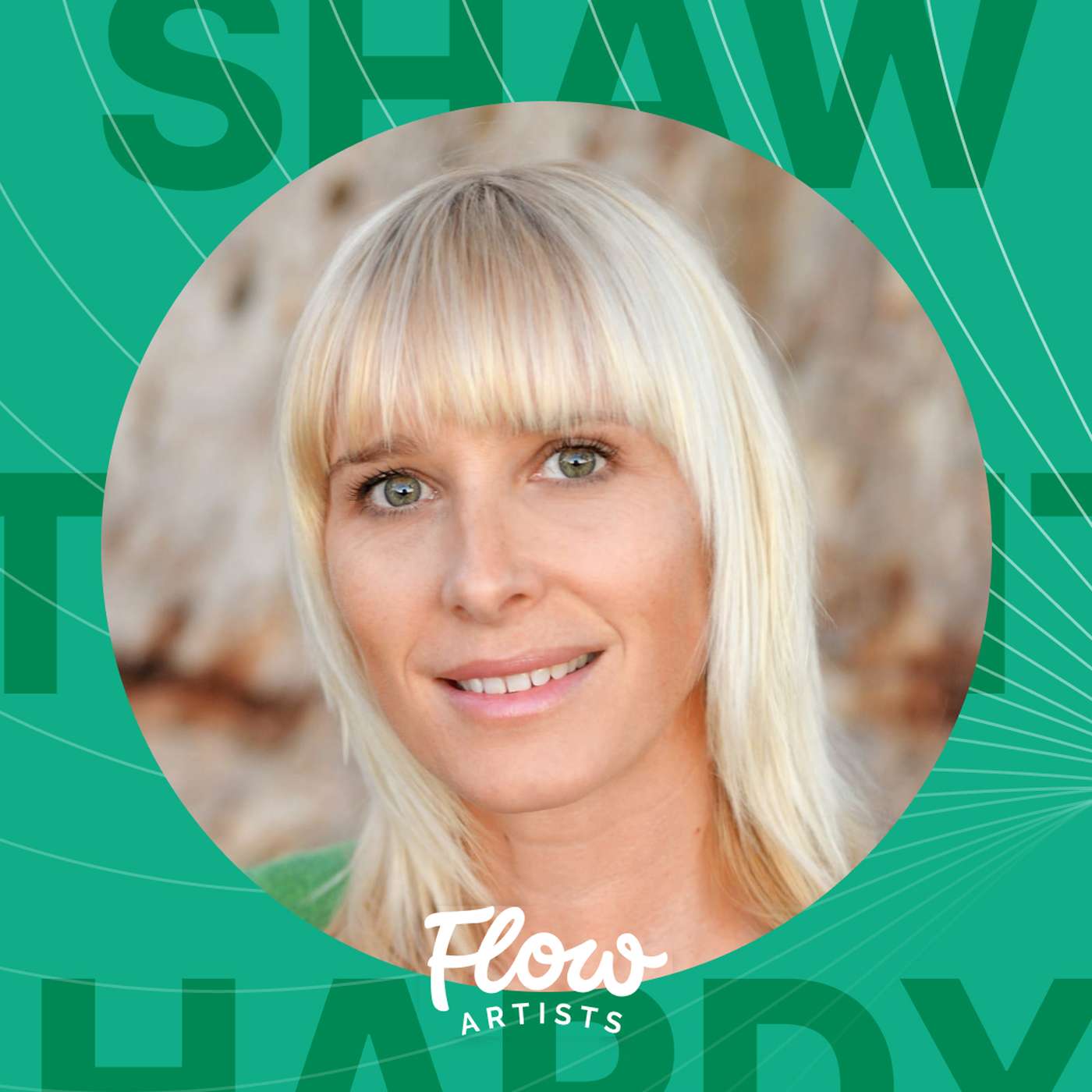
Shawnee Thornton-Hardy - Re-release
A rerelease of one our favourite episodes and a little life update!
Jo shares a little about why she and Rane are pressing pause on the podcast, and also shares how our guest Shawnee Thornton Hardy has released a new book: Yoga Therapy for Children and Teens with Complex Needs.
Shawnee is a Certified Yoga Therapist, Educational/Behavior Consultant and the author of Asanas for Autism and Special Needs. Shawnee specialises in working with neurodiverse children and adults and we were pretty excited to speak with her on this topic - It’s just one of the aspects of yoga we have started to learn more about.
In this episode, we learn what neurodiversity means and what drew Shawnee to working with neurodiverse children and adults. We discuss the ways Shawnee structures her classes to accommodate diverse needs and how her techniques can be useful in all yoga classes.
One of the things we learned was how much in common Shawnee's approach had with the trauma-informed approach to yoga. This lead to a conversation about what yoga really is.
Links
Website: https://www.asanasforautismandspecialneeds.com/
Blog: https://asanasforautismandspecialneeds.wordpress.com/
Facebook: https://www.facebook.com/asanasforautismandspecialneeds/?ref=hl
CALMM Yoga toolkit: https://www.asanasforautismandspecialneeds.com/#!product-page/p0o2r/8fe8f05f-951e-1563-b917-88adf8284543
Shawnee's Book: https://www.amazon.com/Asanas-Autism-Special-Needs-Self-regulation/dp/1849059888
Transcription
Please email us to report any transcription errors
Jo: Hello, it's Jo here. I'm recording this on the unceded lands of the Wurundjeri people of the Kulin Nation, and I'm just popping in to give you an update on the Flow Artist Podcast. Well, we're taking a bit of a break. We've had a lot going on behind the scenes, including the death of Rahnstadt. While we love recording the podcast and really appreciate everyone who listens and supports us, it does take a lot of time and energy to schedule, research, record, edit, and share each episode. Keeping a sustainable balance between work, health, creative projects, and family life is something that we talk about with many of our guests, and we're going to listen to their wise advice to rest when you need to. Our plan is to return in early 2027, and we already have some great guests lined up. And we might be back before then with some more best-of re-release episodes if we have time. Which is actually what I'm doing today. We have a lot of favorite episodes in the vault. We've actually been recording the Flow Artist Podcast since September 2017. Over our break, I'm also planning to do some Instagram Live broadcasts with different guests, including some of the contributors to my book, 'Eight Limbs of Aerial Yoga,' which will be like little mini podcast episodes. It'll be a conversational interview format, just like the podcast, but with a bit less admin behind the scenes, and also, since it's live, you can ask questions in real time. So please follow me @gardenofyoga on Instagram if you'd like to check those out. I've also set the date for my next Bali retreat, at the beautiful Floating Leaf Eco Retreat, and this time I'm collaborating with Meg and Misty from Ocean Air Yoga in Geelong. Floating Leaf is a Balinese-owned venue, and learning about local culture is a big part of the experience. We'll also be doing daily yoga, aerial yoga, and meditation sessions, eating amazing food, and there'll be lots of time to relax and enjoy the beautiful pool and garden setting. It's open to all levels of aerial yoga experience, including first-timers. The retreat will run from August 3rd to 7th, 2027, and I'll pop the link in the show notes if you'd like to find out more. Today I'm resharing one of our favorite episodes, with Shawnee Thornton-Hardy, Autism and Neurodiversity and Yoga, which was recorded back in September 2020. Shawnee is an incredible author and educator and has released a new book, Yoga Therapy for Children and Teens with Complex Needs, since we had this conversation. We love talking to Shawnee and we really hope you enjoy listening.Jo: Now on with the episode.
Rane: Hello, my name is Rane and this is the Flow Artist Podcast. Every episode we speak with inspiring movers, thinkers, and teachers about how they find their flow, and much, much more. My co-host Jo Stewart and I would like to honour the elders of these wisdom traditions of yoga and mindfulness from India and Asia. We also wish to honour the traditional custodians of the land where this podcast is recorded, the Wurundjeri people of the Kulin Nation. I hope you're well. We're back from our break. It's been a busy few weeks. I'll talk about that a little later. But Jo and I are really excited about the guests we have coming up, as well as our guest today. This episode features a conversation between myself, co-host Jo Stewart, and Shawnee Thornton-Hardy. Shawnee is a certified yoga therapist, educational behavior consultant, and the author of Asanas for Autism and Special Needs. Shawnee specializes with working with neurodiverse children and adults, and we were pretty excited to speak with her on this topic. It's just one of the aspects of yoga we've started to learn more about. Jo and I have just started doing accessible yoga training with Jivana Heymann and other amazing teachers. We're loving learning from experts in this field that we're so passionate about, and also it's a chance to connect to a global community. We're still in lockdown and it's nice to have something positive to focus on. As I mentioned earlier, we have been busy working on other projects including one that we've just launched called Thrive Northside. It's not 100% related to yoga, but it is a way that we can help support independent businesses in our local community. We're sharing stories of local businesses and the people behind them, creating a directory of support services, and sharing articles about sustainability, digital marketing, and more. This is made possible with a grant from Darebin Council, and if you're based in this area, we would love to hear from you. You can find us on Instagram, Facebook, and via our new website thrivenorthside.com. I'll leave a link to all of these in our show notes. This episode was brought to you by our sponsor Yoga Australia, registering teachers and training courses to ensure that everyone in Australia has access to quality yoga teachers. All right, let's get into our conversation with Shawnee Thornton. Hardy. All right, Shawnee, thank you so much for catching up with us today. It's marvelous to get the chance to speak with you. Perhaps we could start with you just telling us a little bit about your background and where you grew up.
Shawnee: Sure. I first just want to say thank you so much for having me on your podcast and just giving me an opportunity to share. I have an interesting story behind my background and how I grew up. I actually grew up in the mountains in Montana. In a little roundhouse with my mother, my father, and my two brothers with no electricity or running water. So very unique experience, unique way of growing up, just surrounded by nature and lived in that home in the mountains of Montana until I was about 13. So really found a deep connection to nature and deep connection to the outdoors through my experience and growing up in that way.
Jo: And was yoga also a part of that, or did you discover yoga later?
Shawnee: I didn't discover yoga until later on, actually. I would say that, that I, I wanna say yes, yoga was a part of it because there's so many elements of, of, of yoga and not just the, the physical asana of yoga. I think that deep connection to the world around us is, is also an essential part of yoga, but I actually didn't find the practice of yoga until later on in my career and later on into adulthood. When I was living in San Diego and was a mother. I was going through a lot of difficult transitions in life and had experienced a lot of illness and a lot of anxiety and went through a lot of trauma as a child. And a lot of illness and disease manifested through, I think, those experiences that I had as a child. And so I actually was referred to yoga by a physical therapist. For a back injury and for, for some intense back pain I was going through. And then took my first yoga class. And that was just really the beginning of it all was taking that, that first class and just noticing and experiencing and feeling into my body and just feeling a sense of peace for, for that period of time. That was how I found yoga or how yoga found me.
Jo: Wow.
Jo: So it sounds like from from that early childhood, it was like the beauty of connecting with nature and just being in that wonderful natural environment, really, that felt like something that you reconnected with when you began doing yoga in your later life. But also yoga was a tool to help you process like some of the hard times and some of the trauma. I'm wondering what drew you to working with neurodiverse children, because I can already feel a few themes that might be unfolding there as well.
Shawnee: Yeah. Yeah. I think, you know, I think it's interesting because it's difficult to say that there's one, one thing that drew me to working with, you know, neurodiverse children and adults. I think really my path and all of these merging paths kind of brought me into this, onto this one path that I'm on now. But I think my experiences I had as a child and as a young teen and some of the challenges and traumas that I went through, there was always this innate desire within me to work with children and to be a teacher in some capacity. I used to line up my porcelain dolls along the wall and teach them lessons and remember loving to read stories to my younger brother and just having this knowing that I, I would be a teacher from an early age. That was really never a question for me in terms of what I, I wanted to do in my life. But my path in working with children with diverse needs happened when I was living in Boston. I moved to Boston when I was 17 and was on my own pretty much when I was about 13 years old, but decided to leave my small town and move to Boston. And I had a job as a preschool assistant. And I always speak of this young boy, his name was Austin, because he really was one of my first teachers or even gurus, if you want to call him, because he, back then, that was years, I mean, decades ago, it was more than 20 years ago that I was working as a preschool assistant. And there was very little understanding or education around autism. And there was a young boy named Austin in my program who just had some unique ways of interacting with the world around him. He struggled with social skills, he struggled with communication and struggled with self-regulation. And there was just a connection and a bond that we had with one another and I really wanted to find ways to support him and to help him thrive. He had a single mom as a mother that I felt really drawn to and connected to as well. And he really truly is the person that brought me onto this path and gave me the passion and desire to want to learn more.
Jo: Oh, it's such a beautiful story. And I guess what we should do now is just articulate what the term neurodiversity actually encompasses? Because autism is just one aspect, right?
Shawnee: Yes, it is one aspect. And, and really what neurodiversity is, is just really a variation in the human brain regarding sociability, regarding learning, attention, communication, sensory processing, and other mental functions. So really it's just Diverse brains. It's diverse ways in which our brains learn, diverse ways in which our brains navigate the world. And so, you know, there's, there are references to neurodiversity or neurodiverse brains or neurotypical brains. And really what I have found in my, my many years, and it's almost going on 3 decades of me having worked with children and adults with you know, neurodiverse brains is that we all tend to, to be neurodiverse in the way that we take in the world. We all learn in different ways. And neurodiversity, really, it's about celebrating that our brains, our brains are different in the way that they learn, rather than thinking that they need to be fixed or that there's some type of cure that we need to find, that it's more about embracing our diversity and embracing the ways in which our brains learn and navigate the world in different ways.
Jo: And that just seems like what yoga is in terms of the body and in terms of the brain, just learning about ourselves, learning about how we all take in information and how we move through the world.
Shawnee: Yeah, and that's, I think, why I, I became so passionate about weaving in my many years of experience and passion of working with children and adults of, you know, diverse needs and abilities. And we integrating yoga because I found in my own experience that that was such a big part of my path was learning so much about myself and learning so much about my own thinking and behavior patterns and my own nervous system and the way it responded to different triggers and stressors and the different ways that I learned and Yoga really was a window into that for me. And I really wanted to share that with the children that I was working with at the time and thought that it would be a wonderful complementary tool really in, in the other, many of the other approaches that I used as an educator and as a behavior specialist. And so, yeah, it's just a beautiful blend of integrating yoga with neurodiverse brains because it's so much about just accepting ourselves, accepting our, our strengths, our differences, and realizing and recognizing that we are whole and perfect just the way that we are, rather than feeling that we have to be— we fix ourselves or that we need to change. It's more about embracing that wholeness, I think.
Jo: Such a beautiful message, and such a beautiful message to have shared with you at a really young age when probably a lot of these kids are going to a lot of appointments and seeing a lot of specialists and doing a lot of tests and doing all of these things that make them feel more different, just to get that message that we're all really unique and we're all whole as we already are. I guess within that though, you are sharing some practices and some teaching with these kids that can be really helpful to help them navigate the world and to help with self-regulation. Would you like to kind of go into a little bit more of what you share in your classes and how the kids find it helpful?
Shawnee: Yeah, there's so many ways that using yoga as a kind of a tool or support for self-regulation— there's so many different ways that it, it can be helpful. But I think some of the primary ways that yoga is supportive is one, by just getting children to be connected to their bodies. We know we're learning so much more about trauma and we're learning so much about more about stress and how when we are in a heightened state of, of stress or when we've maybe experienced significant traumas. And I do look at many of these children as having had experienced trauma in their life. They're navigating a world that they're very sensitive to that in a, on a social level, maybe they don't feel accepted. And so they have their own level of trauma that they may have experienced. And so the foundation is really helping them to get in tune and connected to their bodies. So the first is just body awareness and getting a sense of embodiment of I'm here, here is my body. This is, this is me. I'm, I'm here in this space. Also, many people with neurodiverse brains can really struggle with sensory processing or sensory integration and, and have heightened sensitivity to sensory stimuli, internal or external, or have maybe not even be able to feel those sensory experiences. So they can be hyper or, or hypo, under or over responsive. And so yoga can be a wonderful way to kind of teach them how to be the pilot of their own planes and really learn how to upregulate or downregulate their nervous systems, tune into what's going on internally, just building that interoception and that awareness of, you know, what are the sensations that I'm feeling internally? And we know that self-awareness is the foundation of self-regulation, right? So we first have to have that self-awareness, that connection, that capacity or ability to tune in, and then we can learn how to regulate. We can learn how to upregulate or downregulate. So I work a lot with the nervous— children's nervous systems. All of our nervous systems are different in the way we navigate the world. And it's really about— the way that I think about it is it's so much about just self-empowerment, getting children to be able to connect to their own internal sensations, pilot their own planes, and be able to develop healthy boundaries around their bodies and their brains and, and the ways they navigate the world. So using a lot of different breathing strategies, movement strategies, movement that's empowering to them, and, and that can be different for each individual person, right? So it doesn't necessarily mean that every single specific asana would provide an empower— an internal felt sense of being empowered, but just getting them to tune into that and really feel into what, you know, what, what types of poses or breathing strategies feel good to them or feel empowering to them or help them to upregulate or downregulate depending on where they are in their nervous systems.
Jo: So knowing that in the room you've got all of these different individuals, and as you were saying, some of them might be getting too much sensory input, some of them might be not really connecting with some senses. How do you navigate that as a teacher in the class to kind of give instructions that are clear enough for kids to take in and knowing that everyone's got a really different sensory experience going on? Are there practices that generally seem to resonate with everyone or is part of the teaching journey just finding these individual ways that different people can connect to this practice while still kind of keeping enough of a collective whole that it just doesn't become really confusing for everyone?
Shawnee: Yeah, that's a great question. And always the challenge, isn't it, with, with, I think in teaching any yoga class that we are trying to meet the needs of, of anyone that shows up. And what I always say, even in my trainings that I lead, is that we can't meet every need of every child, but we can meet one need of every child. And so when I have a group of children in front of me, what I try to look at is what is a, what is A need that I could meet through the, this sequence or through these different breathing strategies. What is a way that I can support the whole group in, in the approach that I'm teaching or in the sequences that I choose or at the pace that I'm teaching? And so I'm always taking into consideration each individual that's showing up and then trying to find a way that I can make it meaningful for the whole group. And sometimes it's, it's really beneficial to do more one-to-one when you have children that might need a little more extra attention, or you may need to get to know them a little more to understand their needs. And so it's a combination, I think, of looking more on the individual level and then also the collective, because the socialization is such an important part of getting these kids in classes together. This is a big area that so many children with neurodiverse brains, it's, it's really a struggle. And oftentimes they, they might miss out on more of those social opportunities. And so as important as it is to look at the individual, the collective is just as important as well.
Rane: Nice. And is cultivating self-love and acceptance also something that you might weave into your classes?
Shawnee: Yeah, I would say that's actually the foundation of really Every class is, again, just going back to the foundation of yoga is, is this recognition and understanding that we are all whole, we're all perfect. And then also really helping children to see that they have a purpose in this world, that we are all here, we all have a purpose. And you know, that they are, their lives are meaningful, that they're, they're meaningful, that they're important. And, and so many of the children I've worked with over the years, I tell them that they're my teachers. They teach me so much about my own self and about the world around me. And so a lot of it is really about helping children to tap into that self, self-empowerment, build up their self-esteem, their self-confidence, and really teach to their strengths. You know, so many of these children throughout their lives, you know, their, their weaknesses or their areas in which they're not like other people, their differences are so often pointed out. That it's just a lot about talking about how their differences are really wonderful and how they have a role to play in this world. And that's really the foundation of my teaching and anything that I do is to help children to really, yeah, feel love for themselves and to see their purpose. Yeah.
Jo: Oh, that's such a beautiful message. And it's so beautiful. And it just— everything that you're saying really comes back to like, oh, this is just the message. This is what yoga is for all of us. And I think that I saw you had a statement about— it was about neurodiversity and about how everything that you learn working with the population that you work with is absolutely applicable to the wider population because we're all neurodiverse and what you might see in your classes might be the volume turned up on some of those particular challenges and particular struggles, but it's also kind of part of being a human being and just tuning into what makes us different, what makes us unique, and how that can be a strength as well as a struggle in life.
Shawnee: Yes. Yeah, I agree. And I think, I think so, so often, I think for so many years the focus has been to sort of put us in a, you know, put people in a box and get us to sort of be these cookie-cutter people. And I think we're realizing so much more that our differences are what make this world a beautiful place. And so many people with neurodiverse brains have contributed so much to our society and to the growth of our society. And I just think that, yeah, it's, it's, it's really embracing everyone's differences. When anyone comes into a yoga class, it's, it's recognizing that we're all different and really trying to steer away from that idea that we need to look a certain way or we need to be a certain way. It's more about how can we experience this in our own bodies and, and find what really works for us and really tune into what what, what serves us the most and what helps us to grow and what helps us to tap more deeply into who we are as, as human beings.
Jo: Such a beautiful message. I guess though, there are, there are some challenges with working with this population. Like a friend of mine works in disability with neurodiverse kids and she actually gets hit at work quite a bit. Like, and that's a challenging part of her job. How do you navigate dealing with behavioral challenges and things things like violence, which is probably an uncontrollable outburst at the time, like not something that that child would do deliberately, but also is not acceptable in your class or in society in general. Like, how do you navigate that? How do you navigate that feeling of helping the child feel whole and complete while also being really firm on important boundaries with them and not escalating that situation?
Shawnee: Yeah, well, I think a lot of it is about how, how you set up your classes in the first place. I'm a behavior specialist, so that's my, that's my foundation in my work that I've done over the years is really working with children with the most challenges and in the school district here in San Diego and, you know, aggressive behaviors and other really challenging behaviors. The first thing that I think is just about being proactive. If you are having classes, that you gather information in advance. If you're teaching, you know, children with diverse needs, that it's really important in, in practicing ahimsa, which is non-harming for yourself and also the, the child that might be coming to your class and the other children, is that you gather information in advance and, and know whether or not that child is, is really prepared to be in a group class, or if it's better to just offer some individual sessions and develop a relationship with the child where they feel more of a sense of connection, a felt sense of safety with you, and they learn some poses and some breathing, and they, and they build up a sense of self-confidence and self-esteem before you just place them into a group setting, if that's something that is anxiety-provoking for them or challenging for them. And so I think a lot of it is about really setting them up for success. And so oftentimes I, I always gather information in advance if I'm, if I'm teaching a class with children with diverse needs. And that's, that is a question I ask is about aggressive behaviors. And so it's not about wanting to keep that child out of, of being able to participate. It's more about helping them to have a sense of success. Because you don't want for a child to come into a class and for them to then experience a negative experience in the class if it's something that you could maybe create more of a safe container around at the beginning and then integrate them into the group setting after you've developed more of a relationship with the child. And so much of behavior is about our own regulation. We are the co-regulators. And so building that foundation of, of, of, of safety and trust and attunement is really helpful. So knowing that information in, in advance and really having a good idea of whether or not that child is able to be in more of a group setting or if it's better to start more on an individual basis. And then some of the strategies that I put into place, I mean, so much of it is about really teaching to their strengths and finding those things that they are most interested in, maybe even teaching to their interests. Many children with neurodiverse brains, oftentimes you find a topic that they're interested in and teach to that topic, and, and that can really engage them and keep them part of the group. Trying to focus on the, the positive behaviors or the behaviors that are supportive to them rather than focusing all the energy on the behaviors that might be unexpected. So there's, it's a really deep topic, the topic on behavior. I would say that it's a lot about scope of practice as well. If you're a person that's used to working with children who have more challenging behaviors and you feel a sense of confidence in being able to find successful approaches in the class, That's different than if you're a person going into teaching a yoga class and you don't have any background or knowledge around how to best support a child who might have more challenging behaviors. So a lot of it about is about education and knowledge and training and really gathering those tools before just delving into teaching a class with, with children who might have behaviors because you really want to set that child up for success, you also want to set yourself up for success as well as a teacher, right?
Rane: Absolutely. Yeah. And I'm curious, how has awareness around neurodiversity and autism evolved since you began doing this work?
Shawnee: Yeah. Oh, it's evolved quite significantly. And, and I think I get asked this question so often in terms of— I get asked many questions about my my thoughts about the prevalence of autism and, and, you know, the increase in numbers. And what I would say mostly what I've seen has, has evolved and changed is our awareness around autism. And because we have more awareness, because we have more early intervention or more understanding of how to diagnose a child with autism, there's more awareness around it. So of course the prevalence is going to go up in that sense, right? If we don't have awareness 20 years ago, we don't have the correct ways of really assessing a child for autism, then we're not going to have the same amount of prevalence as we do now where it's more— yeah, it's more— it's something that is definitely part of early childhood intervention. I also think there's a lot of awareness just in general in society around autism. We have a lot more voices of adults with autism, or— and I want to, I want to name this, that some individuals with autism like to be referred to as an adult with autism or a child with autism, and some individuals with autism like to be referred to as autistic, like an autistic adult. So I just want to name that right now because I think that's really important that we honor that, that we honor that different people like to be referred to in different ways. And so So if I say an adult with autism, it's just for the use of conversation, but they might want to also be referred to as an autistic adult. So that's just an important clarification that I wanted to make. And I think that there's more media around it. There's more television shows where they're including people with autism. There's a Sesame Street character of a young girl with autism to help educate other children about autism. And so there's just a lot more in our mainstream media. There's a lot more understanding in the education system. There's a lot more understanding in the medical system. If a child, a parent brings their child in and they're having some challenges that they assess them. So I just think that there's, yeah, it's grown so much because people tend to have more awareness around it.
Rane: Sorry, I'm just curious, is there a particular reason that people prefer, uh, the distinction?
Shawnee: You mean in terms of people with autism?
Rane: Yes, yes.
Shawnee: Yeah, and, and so, you know, I've had the fortunate opportunity of being able to develop relationships with adults with autism and to really, you know, I think that's so important that to prevent ourselves from kind of moving into that direction of Ableism, that we really honor how others want to be referred to in terms of their disability or their neurodiversity. And so many adults on the spectrum have communicated that autism is part of who they are. It's not something that they carry with them or that they, they don't have with them at all times. It's really part of their their whole being of who they are. And so they like to— it's important for them to be referred to as autistic rather than a person with autism. And, you know, I think in the disability world community, people prefer different ways of being referred to in terms of a person with a disability or disabled person. So I think it's a matter of preference and it's important that we, we ask that and that we honor that. No matter what our history is or our background is, I think oftentimes as educators, we're taught to speak person-first language, you know, which would be a child with autism. But there are many people in the autistic community or the autism community that, that prefer to be referred to as, as autistic individual.
Rane: Hello, Rane here, just talking about our Patreon page. Patreon is a way that you can help support the podcast for as little as $1 US a month. Higher tiers get access to extra special content as well as a listing on our website and a shout-out on the podcast. We just had our episode with Mariko B. Ryan transcribed thanks to the support of our Patreon members, so if you'd like to help us with a small monthly donation, just go to patreon.com/flowartistpodcast and join the fun. If you'd like to support us in other ways, you can share this episode on social media, Subscribe to us on Apple Podcasts or Spotify, or just reach out and let us know your thoughts on this or anything else. All right, let's get back to our conversation with Shawnee.
Jo: I actually just watched a TV show, Love on the Spectrum, which was a really great example of that because— oh, would you—
Jo: do you have thoughts?
Shawnee: I— oh, I just love— no, I love that show. Yeah, I watched it as well. And it was, it was a great, it's a great show just showing the challenges of of what, you know, people on the spectrum may face in terms of relationships and developing relationships with others. And so it was a good, a good perspective, I think, into that.
Jo: Absolutely. And I like seeing people's language around how they self-identify was something that I really noticed in that show as well. And it was just a great example of like what you've been talking about with neurodiversity, how these things that these differences that we all have really shape us as a human being and shape our offering out into the world. And like, they're our gifts, but they're also what might, might make our passage through life more challenging. And I think it's just so beautiful that you're connecting with people at a really young age and just giving them some more tools and some more tools for self-understanding and self-regulation.
Jo: To—
Jo: that they can draw from through their whole lives. And I think everyone I know who has really got into yoga kind of say things like, oh, I wish I knew about this when I was a teenager, or I wish I knew about this when I was a kid. It's like a practice for your whole life.
Shawnee: Absolutely. And I think that the earlier we get children connected to yoga and more in tune to their bodies and more connected to like I was talking about, their interoception, the connection to their internal sensations, you know, we can help children to have more self-agency, right? And, you know, children are, they are a community that really is not often given a lot of power, right? And often their boundaries are quite often crossed. And in particular, children who have disabilities or children who are neurodiverse. And so it's really important that we're teaching children these, these things early on. And I say the same thing. I had, I known or had these practices when I was young, and there's a lot of research out there that is growing on the benefits of yoga and mindfulness for, for children and youth. There's not a tremendous amount of research on for children with autism or neurodiverse brains, but there, there are a few studies out there, but there's growing research. And we know, we know from our own experience how supportive it can be in our own lives. So we can teach children these tools early on. Imagine, imagine, I think some of the challenges that they might be able to navigate with more ease. And it's just so much about helping children build resilience and capacity because we know we can't keep children from suffering. We know suffering is a part of life. It's more about helping them to build that capacity and teaching them about their own innate internal resilience that they have within themselves. And I think these practices really support that.
Jo: Absolutely. And do you find that yoga is generally respected and people are referred to you through the wider, the wider medical system and the education system as being a helpful intervention or a helpful support system, or is raising awareness of this also part of your mission?
Shawnee: Well, I think it, it's a combination of both. I'm seeing that yoga is being embraced tremendously by professionals in the field who work with children. In fact, I am so blessed to get to connect with pediatric PTs and occupational therapists and speech therapists and medical, mental health practitioners, nurses. I mean, I've had people from all backgrounds who work with children coming to my trainings with a desire to just have more complementary therapies, a desire to bring some different approaches to children to help them again. And I think the main focus behind it is building that resiliency, helping them to learn how to be more regulated, And so many people that come to the training, of course, have experienced yoga in their own lives, but I have many people who come who've never experienced yoga, but just have a very strong interest in finding other modalities. And one of the things I love about yoga is that it's not goal-oriented. In so many therapies, a child has a goal and they do these practices or these sessions where they're, they're engaging in more of a kind of goal-oriented practice. But with yoga, children are meeting so many, so many milestones and are, are building so many, building in so many gaps in their development through just a natural state of play. And that's what I find to just be so intriguing and wonderful about teaching yoga. So I have people really from so many different backgrounds that are, are interested in integrating this into their own practices, whatever that might be. So I think there's a great deal of interest, but I also— that is part of my mission is bringing more awareness and ways in which it can be integrated into so many different therapeutic practices and modalities. So that's, that's a lot of what my trainings are. It's really about empowering people to see how they can weave that into the own— their work that they do with children.
Jo: And I guess this leads into your other work, because you're not just a yoga teacher, you're the founder of Asanas for Autism and Special Needs and a founder and director of Yoga Therapy for Youth certification program, which seem like full-time jobs in themselves. Did you always have such a big vision to create these foundations and training programs for or is it just something that evolved over time as you saw the need?
Shawnee: Yeah, well, I first will just start with saying that I'm just a dreamer and I just have a lot of passion in my heart. And I think it's just been a natural progression. It's never been a lot of— there's never been a question behind any direction that I've gone. And I really think that that's part of dharma. It's part of my, my dharma and my purpose in this life. I know not everyone is so fortunate to be able to kind of with, with such ease move on that path, but I really feel that every experience I've had in my life, every challenge, every struggle, every triumph has really led me in this, in this direction. It's two decades of working as an education and behavior specialist with, um, with children, diverse needs. And my yoga training and my passion for learning more about yoga and neuroscience and really, really having a foundation and understanding around that as well. That's just brought me on this path. I was teaching actually full-time and was a single mom and really felt like I needed to do something different. I needed to do something more. I wanted to expand this outside of just being in a small classroom. I wanted to be able to actually help this momentum grow. I actually wrote my book while I was teaching in my program because the strategies I was using were so successful. I did my, my thesis project on the effects of yoga on attention and on-task behavior for children with autism and ADHD. And so I was doing, I was actually collecting data and And, and just seeing the benefits and effect it had for the children, that was my motivation to write my book. And then I wrote my book and I saw how excited people were about that and wanting to learn more. And I worked as a consultant with parents and other educators. And so it was just natural for me to teach adults as well. And I always knew I wanted to be a teacher. It doesn't matter what capacity I'm teaching. I just love teaching. And so that's, that's really how this all came about. It was just this really natural progression. I did have to take a giant leap and left a 17-year career with benefits and, and a consistent paycheck and kind of had to move out of my own way and do it. But I just felt this really strong desire. And now I'm so grateful because I do get to have a wider impact. I get to teach and share with adults who bring this into their community. And I think that's the greatest way to help this expand is by passing those tools on to others so they can bring it into their own community and share it with their, the families and children in their area. So I'm really grateful and somehow it was just a natural progression in that way.
Jo: That sounds so beautiful. And hearing you talk about it, it sounds like it just unfolded, but I imagine it was a lot of hard work. And because so much of what you do is about self-regulation and modeling that self-care, I, I don't think you could do the work that you do if you like showed up flustered because you'd just been like answering emails or not slept because you'd been writing your book or looking after your own kids. So you must have really had to draw on those self-regulation and like planning and life management skills to bring all of this to fruition?
Shawnee: Well, I'm always going back to that, and I have to say that I am still working on all of those things, just like everyone else, in terms of balancing my life and managing my time wisely. But I really had a vision of how I wanted to create my life, how I wanted to live my life, what I wanted to spend my energy doing, and I spent at least 2 years meditating on that and visualizing and manifesting and imagining. So it was a lot of, a lot of intention that I put into that. So it wasn't just an overnight leap. There was a lot of, a lot of me really sitting with it and seeing how I felt about it. But it's a lot of work. It definitely is, is a lot of work, but I feel like when you do work that is from your heart, it's, it, it doesn't feel this the same. There's, there's not the same level of, I think, exhaustion that you get from maybe doing something that's not, not as in alignment with your, your heart. So, but yeah, it's hard work. It's still, it continues to be hard work to own your own business and to, and to, yeah, stay regulated through everything. It's, I think the biggest challenge is being, staying regulated and I've had a lot of actually really significant trauma happen in the last 4 years. And so it's always coming back to my own practice and coming back to myself, because I think we can't do this work if we're not taking the time for our own self-care and our own self-reflection and our own sitting with our own feelings and learning how to be with our own selves. Right. So that's something I say so much in in the trainings is that we need to be doing our own practice, whatever that might be. You know, someone's practice of yoga might not be a physical asana practice. It may be gardening. It may be spending time reading. It may be spending time in nature, whatever it might be, but that we fill our cup. And so that is something that I definitely continue to come back to. It's not always easy, and I'm certainly not— I haven't mastered that. No human. But I'm working on it. It's a work in progress.
Jo: And that's just brought to mind something else that we were just briefly chatting about before we started the interview, how much life has changed now that we're all living through a global pandemic and how all of this work has had to go online. And for me personally, I find teaching online a lot more tiring and energetically draining than I did find teaching in person. And I'm teaching adults, so I can only imagine what it would be like with all of the extrasensory layers that you would bring into a physical practice that you would be like, all of these other tools that you can draw from, and now you're teaching from a screen. Would you like to talk a little bit how your work and your life and your teaching has changed?
Shawnee: Yeah, I mean, I would say I'm not as much teaching group classes right now because my focus is so much more on trainings. And so I have not been having to pivot so much with teaching children through group classes, although I have done some recordings and classes for different organizations and that type of thing to share. I do private sessions and it's definitely more challenging in that sense to navigate technology. I was just talking before we started the interview about really feeling that connection to the resonance of the room and the people or the person in front of you and and being able to be in the same space with each other. So it's, it's a big adjustment, but I think that if we learn the right tools and supports in working with neurodiverse brains or children with diverse needs, if we use those same tools and supports and whether it's via technology or in person, that, that is going to help us continue to navigate having, having more success in those sessions than if we just kind of try to go into a Zoom session without using— and I think what I'm referring to is using visuals, using props and supports that support their bodies, using whatever type of languaging or cueing they need in terms of what their communication level is. You're weaving all of those things into your online teaching just like you would do in person. And that's really why I developed my toolkit that I created is because it's a visual tool and, and there are so many people with neurodiverse brains where they're very visual thinkers and visual learners. So as long as we apply those same tools and those same approaches to our online teaching, I don't think it's ever going to be the same. I think that's part of, you know, what a lot of us have been experiencing is kind of working through our own emotions about things changing in that way. It can't ever be the same to be online versus in person. I think it's just a different experience and something that we have to embrace in that way. Now with my online teaching in my trainings, it's definitely been something that I've had to adjust to. I have the same, I call it Zoom the Zoom hangover. There's a different level of energy that, that comes from that. But it, but I think once we surrender ourselves to the fact that this is kind of our new way right now of being, we, we can learn tools to, to have that same resident resonance and that same connection and attunement, just in a different way.
Jo: And have there been any positives that have come out of moving a lot of your teaching online?
Shawnee: I would say the, the biggest positive is just the accessibility. There are so many people around the world that are interested in learning these tools and people who have thanked me and said, you know, I've wanted to come to your training for so many years, or I've been watching this training, but it's cost a lot of money to travel or to, you have to, you know, if someone's going in person, you have to wait for them to come to wherever you are. So in terms of my trainings, I find the accessibility is just, it's, it's huge. And then accessibility for children. There are a lot of children and families who are in very rural areas or whose families are just overwhelmed by taking their child into, to another appointment or another meeting or driving to another setting. So there's so many wonderful opportunities to embrace technology in a sense in being able to offer these resources to families and children that who may otherwise not be able to access it. You know, you have many children or adults with disabilities where it's, or who may have some autoimmune challenges, or children who have difficulty going into new settings where you can teach from the comfort of their home and eliminate a lot of those barriers or challenges that they might face.
Jo: Yeah, that is a great benefit. And we will definitely link to your book and to your— is it C-A-L-M-M or CALM?
Shawnee: Yeah, CALM. CALM toolkit. Yes, yes. The, the, the meaning for that is the C is center, the A is assess how I'm feeling, the L is let myself breathe, the M is move my body, and the other M is make positive choices. So it's just getting children to kind of connect to breathing and moving and, and tuning in, and, and then really knowing that that can help them make positive choices for themselves around that. So that's, that's the meaning behind that, in case you were curious.
Jo: Oh, so beautiful.
Shawnee: Yeah. So yes, I would love the— yeah, for if you share that resource, it's a great resource and was created really out of the, the desire for parents and other professionals who work with children to have some tools to, yeah, to just bring in some more approaches, a more complementary approach in helping children with self-regulation and body awareness and sensory integration, all those great things.
Jo: And all those things that would just come up in every yoga class anyway, even if you aren't particularly seeking out to work with this population. Like, the thing that I've just noticed coming back again and again is like, we're all neurodiverse. Like, these are tools that we can learn and draw from and just enrich us as, as a teacher and as a human being because we have more resources ourselves as well.
Shawnee: Absolutely. I do believe that it's really our, our responsibility as a society. And, you know, if we are yoga teachers, we, we take on a certain level of responsibility to, to make the people that come in our classes, you know, help them to be seen, heard, loved, and valued. And that's just, that's been, that's my foundation of, of, you know, anytime I teach a class, whether it's children or adults, that everyone that shows up, they see, they feel loved, heard, seen, and valued. So, you know, as I think it's our responsibility to learn these tools, you have people say, you know, I don't work with children with special needs, but I'm interested in it. And I say, well, you, if you haven't yet, you will. And it's so important for you to have the knowledge and understanding of how to help them feel included, right? So yeah, I think as yoga teachers, that's, that's our responsibility. And I think as a society to provide the supports and accommodations to help people with neurodiverse brains thrive in this world. So I, I just mirroring back what you said, I think it's, it's really important that we learn these tools.
Jo: And so I'm really interested to hear about your creative process, both with writing your book and creating the toolkit. I know you're an educator as well, but I imagine as a yoga teacher, so much of what you do would be physical with your body and drawing on all of the different sensory inputs. Was it a bit of a challenge taking that back just to the written form, or was that something that kind of flowed so naturally since you're so immersed in this work?
Shawnee: Yeah, again, I think so much about it. It's just, I love writing. So I've always written since I was a child, so writing was a natural thing to me. And as an educator and working in special education, I always had to create my own resources. It was like, you, when you work in that environment, you, there's no resources out there. There's no textbooks. There's no curriculum designed to meet all the needs of the children that you work with. And so I've created curriculum really my whole career. And so I think it was just a natural progression for me to feel a sense of confidence and the ability to do that just because it's something that I've been doing for so many years. And I've always had this belief as an educator, if it's not available to you, if the resources isn't there, then you just have to create it yourself. And so You know, that's, that's really— I think it came more out of a need for, for me in a sense to create some curriculum that was in alignment with what I was teaching, which was basically that we should be providing visual tools, you know, supports and auditory and tactile and all of these things that help children feel more of a sense of embodiment because we have kids that learn so many different ways that we really should be providing those supports that help them feel successful and help them to understand and process what we're teaching. So it was a really natural progression. It wasn't easy. Like I said, I was working full-time. I was building this business. I was a single mama and I was writing a book on the side.
Jo: In your spare time.
Shawnee: In my spare time. So yeah, now when I work on a project, I think back to that and I think, okay, it's, you have nothing to complain about, just think about that time you got through that, that one period of time in your life when you actually wrote a book during that time. So yeah, it's my love of— I love creating curriculum. I love writing. I love sharing knowledge and I just love the connection that comes from that. So I think it was just a natural, again, just part of the journey. And I, and I always had a dream of writing a book and being an author. So I wanted to make that dream come true, and it was on a topic that was really close to my heart, so it felt fairly natural to be able to write it. Actually, it was more because based on the experiences that I had with, with the children over the years, so it really came from a lot of experience in having applied those strategies in my own setting that I was working in. Beautiful.
Rane: Well, I guess I've just got one more question, and we save it for the end of every episode, So just wondering if you could distill everything that you've learned and everything that you teach down to one core lesson. What do you think that one thing would be?
Shawnee: Oh gosh. Well, a word comes to mind and I think it's just compassion. Compassion for ourselves and compassion for other people. I think when we come from that lens, it just opens our mind and our hearts to our differences as human beings and just helps us feel more connected to other people. And I think it's important for us to recognize differences because for many people, that's how they identify as being different. But it's also important for us to, to just have an understanding that we're all, we're all human, we're all connected in some way. And if we can come from a compassionate lens, I think it just changes It changes our whole outlook in the world and changes our relationships with other people and changes how we feel about ourselves. So I would say that's probably the deepest kind of life lesson or word or, or, you know, whatever you might say that, that applies to, to my life and my work. I think when we come, when we come from compassion, we can't, we can't judge other people if we're in a place of compassion. And we can't judge ourselves if we're in a place of compassion as well. So it's constantly working with our own compassion for ourselves, and then, and that, that brings about that compassion for other people in the world.
Jo: Oh, such a beautiful, beautiful practice to embrace no matter what we're doing in our lives. And thank you so much for sharing that beautiful message and sharing everything that you've shared today and all the wonderful work that you do in the world. I've really loved hearing about it and speaking to you. Is there anything that you wanted to share before we, uh, close off?
Shawnee: No, I just want to say thank you again for letting me share and for allowing me to, to just speak about my work. And, and also, I think just the message that, yeah, anyone can do yoga. I think that's That's the main message is that it's, it's, there's a lot of preconceived ideas about it out there, but if we share these tools and these supports and we teach to neurodiverse brains, then we can make it accessible to anyone. So it's just my last message.
Jo: Absolutely.
Jo: Beautiful.
Shawnee: Thank you so much for having me on.
Rane: Oh, thank you for joining us.
Jo: Yeah.
Rane: Thank you so much.
Shawnee: Yeah. And you guys take care there. Australia is one of my favourite countries.
Jo: Ah, thanks.
Shawnee: I love it.
Jo: I love it.
Shawnee: I love the people. I love the land. I love everything about it. So, wishing you all well.
Jo: Oh, hopefully there'll be a time when you can come back and visit us.
Shawnee: I know. I know. I'm imagining, envisioning, dreaming of all the places that I want to travel to and travel back to. So.
Rane: I hope you enjoyed our conversation with Shawnee. We both learned so much and we are really inspired by her approach. For our next episode, we're speaking with Daisy from Feel Free Yoga. Daisy is a queer Māori woman on Gadigal land in Sydney and teaches queer and trans and BIPOC yoga classes online. Her Instagram profile @daisy_bossy_baddie is fun, colorful, and welcoming to all, as is Daisy. Look out for her episode episode in 2 weeks' time. Our theme song is Baby Robots by Gosoul and is used with permission. Get his music from gosoul.bandcamp.com. Thank you so much for listening. Joe and I really appreciate you spending your precious time with us. Aroha nui. Big, big love.
Friends of Flow


